


Nigeria’s EV policy framework establishes structured market entry pathways
Policy developments in Nigeria are beginning to formalise the electric vehicle (EV) market, with the Electric Vehicle Bill and National Land Transport Policy laying the groundwork for coordinated adoption. Introduced in February, these frameworks aim to standardise licensing, infrastructure rollout, and incentives in major urban centres, such as Lagos and Abuja. Early signals suggest that implementation will prioritise fleet and commercial use cases, where adoption can scale faster due to higher utilisation rates and more predictable operating environments. The shift from fragmented pilot activity to structured policy implementation signals a more predictable environment for investment. This coordinated approach reflects a broader trend where regulatory clarity, rather than technology readiness, drives market formation. For investors and OEMs, including Chinese entrants, early engagement with permitting processes and local partnerships will be essential, as compliance and regulatory positioning will determine market access and scalability.
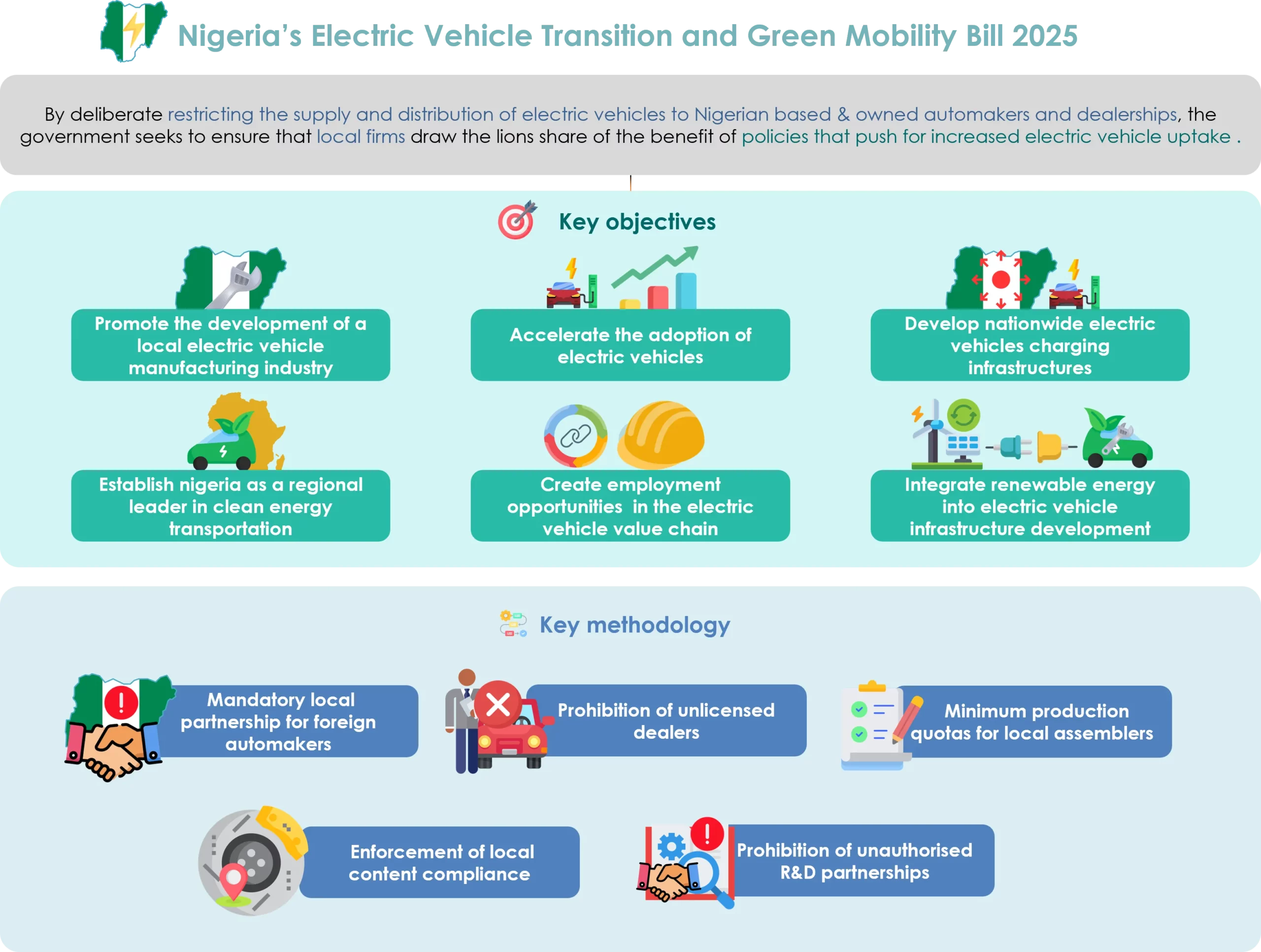
Data courtesy: The National Institute for Legislative and Democratic Studies


Legal Update | Fair Competition Commission (FCC), Tanzania
Tanzania FCC clarifies its position regarding the use of foreign trade mark certificates in support of the Mandatory recordation: 28 July 2026 | Fair Competition Commission (FCC), Tanzania. The Fair C...
October 02 2026
A new framework for IP-backed finance in Nigeria
Nigeria is taking steps to make intellectual property a more commercially usable financial asset. On 5 August 2026, the Federal Government unveiled a Comprehensive Framework for the Development of IP ...
September 15 2026
Nigerian Court of Appeal upholds refusal of COSON injunction
The Court of Appeal in Lagos has dismissed an interlocutory appeal brought by the Copyright Society of Nigeria (COSON) against the Nigerian Copyright Commission (NCC), affirming the Federal High Court...
September 15 2026