Africa’s Top 10 – July Quarterly 2026
A message from the Adams Africa Committee
Welcome to the latest edition of our Africa Advisory.
Across Africa, advances in mobile technology, fintech innovation and digital infrastructure are reshaping economies and creating new opportunities for growth. Initiatives such as the African Continental Free Trade Area (AfCFTA) are accelerating cross-border trade and investment while supporting the development of a more integrated digital economy.
As businesses expand into new markets and embrace digital transformation, navigating evolving regulatory frameworks and protecting intellectual property have become increasingly important to long-term success. Through our extensive Africa network, Adams & Adams supports clients across the continent in safeguarding innovation, unlocking commercial opportunities and growing with confidence.
We trust this quarter's round-up will provide valuable perspectives on the trends, opportunities and regulatory developments shaping Africa's dynamic technology and fintech landscape.
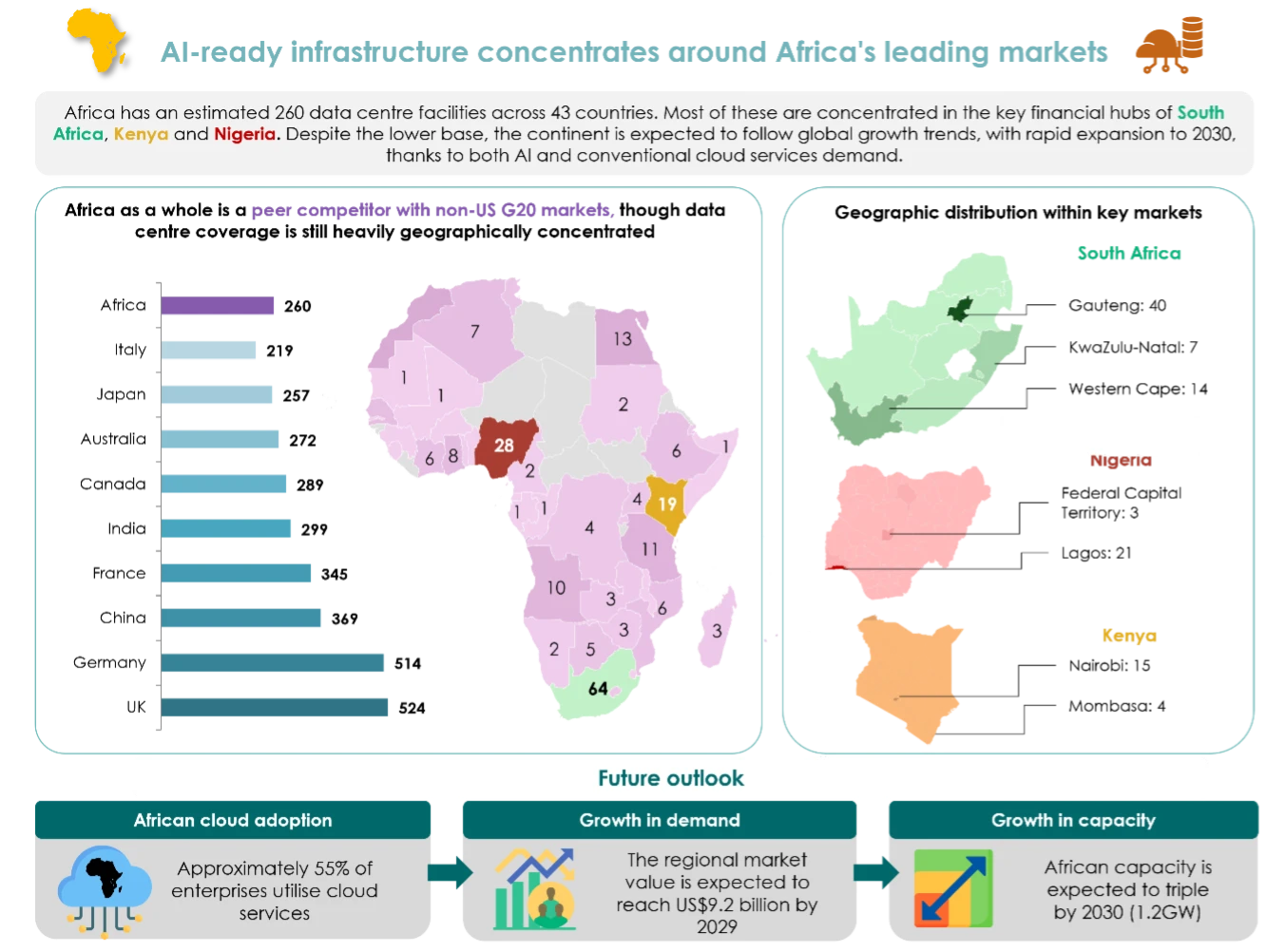
Africa’s AI race gained concrete foundations in Q2 2026, as national strategies began translating into data centres, policy frameworks and commercial deployment across priority digital markets. Nigeria opened West Africa’s first hyperscale-ready AI data centre in Lagos, while the Nigeria AI Scaling Hub added shared national computing infrastructure to help move AI projects from pilot phase to scale. Zambia partnered with Huawei and Smart Zambia to develop a national AI data centre, while Mozambique and Zimbabwe advanced their national AI strategies. South Africa meanwhile targeted January 2027 for a revised AI policy after withdrawing an earlier draft. Market partnerships also progressed, with Google’s Africa investment package adding connectivity hubs across the continent, linked by the Umoja subsea cable. The tech company also opened an applied AI lab in Ghana, providing startup support. In addition, Morocco and Egypt deepened their AI and cloud partnerships. These developments highlight how AI is becoming a strategic infrastructure concern tied to compute capacity, data governance and digital sovereignty. Organisations entering this space will increasingly differentiate themselves through robust procurement strategies, trusted data governance and well-structured technology partnerships.
Crypto’s African story matured in the second quarter as stablecoins and virtual assets moved closer to the formal financial system through regulation and commercial adoption. African regulators advanced towards virtual asset oversight, while Kenya targeted crypto traders through disclosure requirements aimed at improving transparency in a fast-growing digital asset market. Tanzania approved its first stablecoin sandbox pilot, giving regulators a controlled mechanism to test digital currency use cases before wider adoption. Nigeria’s Securities and Exchange Commission admitted additional crypto and fintech firms into its Accelerated Regulatory Incubation Programme, with Luno Nigeria becoming the first global crypto exchange accepted into the programme. Zimbabwe also moved to formalise crypto activity, while South Africa’s Reserve Bank and Treasury responded to questions surrounding crypto asset holdings. Commercial momentum widened as Visa, M-PESA Africa and Onafriq launched a DRC stablecoin pilot for cross-border mobile money transactions. As virtual assets move closer to mainstream finance, success will depend on navigating licensing, anti-money laundering obligations, consumer protection and contractual risk with equal discipline.

During the second quarter, the African Continental Free Trade Area (AfCFTA) digital trade agenda gained practical momentum as Kenya, Morocco and Nigeria moved to pilot a system aimed at supporting cross-border trade administration. Both Nigerian and Zimbabwean firms also explored AfCFTA channels to deepen digital trade, reinforcing the agreement’s growing relevance as a commercial platform rather than only a policy framework. Around this core, governments and partners advanced the institutional rails needed for trusted digital markets. Nigeria, Morocco and The Gambia aligned on cross-border data protection enforcement and knowledge sharing, while Rwanda closed a tax loophole for online services as digital subscriptions expanded. In parallel, Estonia backed digital infrastructure development in Africa, Malawi unveiled a three-year digital plan, and the African Telecommunications Union partnered with the Metaverse Institute on immersive technology governance. Together, the ongoing developments showed that market access increasingly depends on trusted digital systems. Businesses expanding through AfCFTA will increasingly compete on governance readiness as much as commercial capability, making regulatory alignment a strategic differentiator.
Fintech momentum over the second quarter moved beyond payments adoption to increasingly reflect consolidation, investment activity and product innovation. Rwanda strengthened its position as a fintech hub, while in Nigeria, Cycleflow, C2FO, and IFC launched a supply chain finance platform for MSMEs; Moniepoint invested in university innovation hubs; and Paystack launched Index – a checkout product that allows merchants to accept payments through AI agents, including Claude, ChatGPT, and OpenClaw. South Africa saw renewed activity around Bank Zero’s acquisition by Lesaka Technologies, and the Africa Finance Corporation approved a US$100 million commitment to Africa-focused technology funds. Egypt’s largest bank acquired a stake in MNT Halan as its valuation reached US$1.4 billion, signalling deeper bank-fintech integration. The developments indicate a maturing fintech ecosystem in which access to capital, licences, partnerships and AI-enabled payment experiences are becoming as critical as product innovation. Looking ahead, competitive advantage will increasingly depend on disciplined execution across partnerships, regulation, and scalable commercial models.
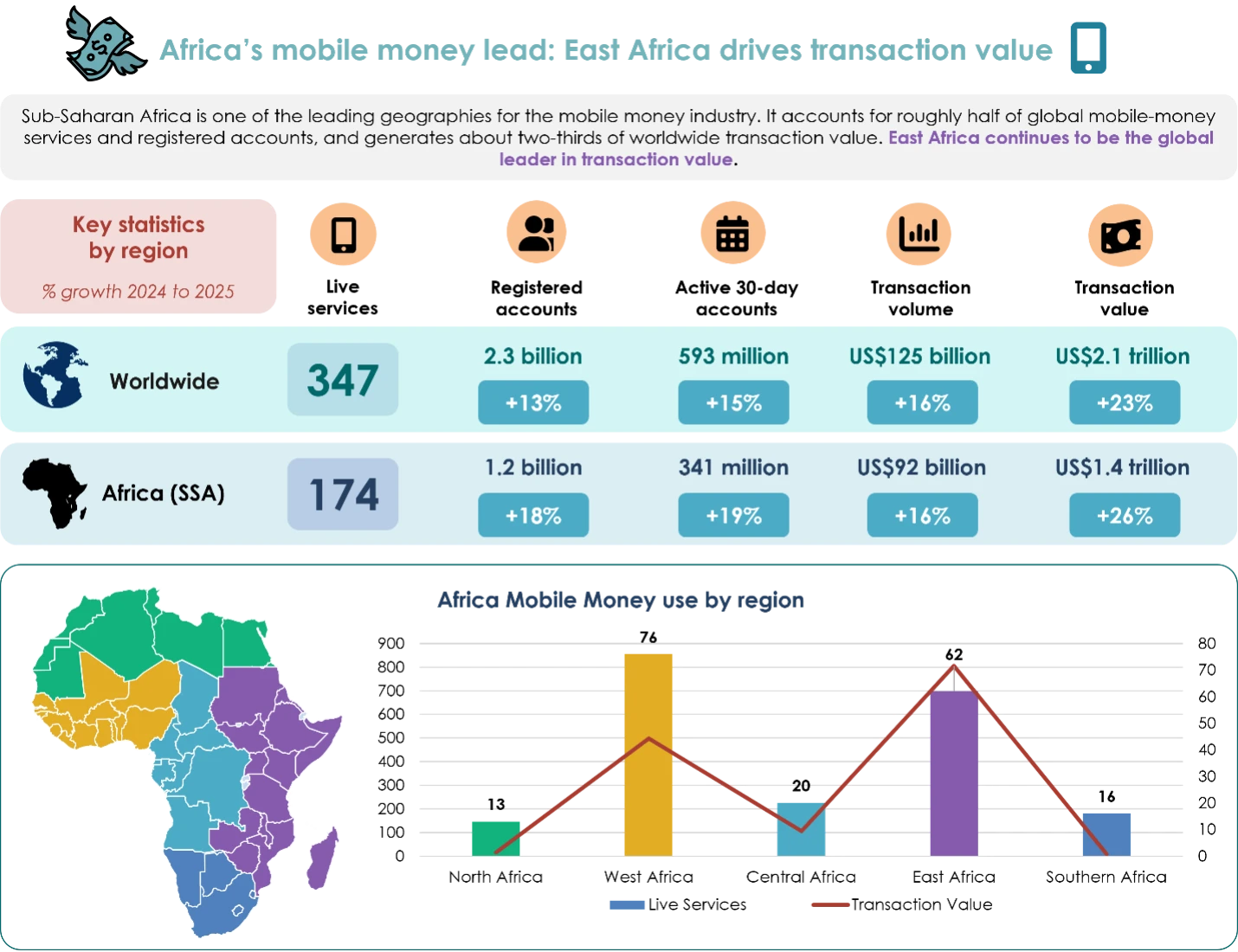
Africa’s mobile money market entered a new integration phase during the second quarter, with payment rails becoming increasingly central to regional commerce and platform growth. Vodacom Tanzania partnered with Thunes to enable real-time international payments through M-Pesa, strengthening links between mobile wallets and cross-border remittances. MTN Rwanda’s earnings reinforced the commercial value of mobile money, while Tunisia launched TUNPAY to unify mobile payment systems nationwide and create a coordinated payment identity and acceptance layer. South Sudan’s central bank also discussed a regional cross-border payment system with FSD Africa, signalling broader institutional momentum across East Africa. Vodacom’s acquisition of additional Safaricom shares gave it control of one of Africa’s leading telecoms and fintech platforms, reinforcing East Africa’s role as a key scale market for mobile wallet-led services and digital ecosystems. These developments marked a shift from domestic mobile wallet adoption to a more interoperable regional payment architecture, rewarding institutions that can scale securely across multiple regulatory environments.
Beneath the visible growth in mobile services, Africa’s broadband backbone became a strategic infrastructure priority in the second quarter of the year. Uganda approved Starlink after a prolonged regulatory process, opening another market to low-Earth-orbit satellite connectivity. Angola Cables and Uniti expanded connectivity, while a new subsea cable was launched to strengthen Europe-Africa links. South Africa advanced satellite regulatory reform through draft amendments published by the Independent Communications Authority of South Africa, signalling closer oversight of non-terrestrial connectivity and related licensing requirements. Further momentum came from European Union funding for a Google-linked undersea cable connecting East Africa, Amazon’s satellite ambitions challenging Starlink’s African positioning, and Namibia facing pressure to reconsider its decision to deny a Starlink licence. Rwanda also strengthened its credentials in satellite infrastructure as Rwanda Teleport became the first fully certified facility of its kind in Sub-Saharan Africa. As broadband infrastructure becomes increasingly strategic, commercial success will favour businesses able to secure long-term connectivity partnerships while navigating evolving licensing frameworks.
East Africa became a compelling test case for regional digital integration during Q2, with policy coordination and connectivity reforms advancing in tandem. The East African Community progressed a regional mobile roaming framework to support cross-border connectivity, making telecoms integration a practical part of regional digital trade. Kenya and Rwanda also deepened digital economy ties, reinforcing bilateral cooperation in digital services and market connectivity. The regional picture widened as East Africa moved to address cross-border connectivity barriers, signalling a shift from fragmented national systems towards more interoperable digital corridors. Unlike broader pan-African digital integration narratives, this demonstrates how a specific region works across roaming policy, bilateral cooperation and infrastructure coordination. East Africa’s experience suggests that regional scale is increasingly built through coordinated policy and interoperable infrastructure rather than isolated national initiatives.
The consumer gateway into Africa’s digital economy became more dynamic during Q2 as device access, mobile onboarding and contactless payments converged. Kenya’s Finance Bill 2026 targeted smartphones through a proposed excise duty, raising affordability concerns for digital inclusion and handset distribution, while Cameroon blocked undeclared mobile devices, underscoring growing customs and compliance scrutiny. In South Africa, Apple launched Tap to Pay on iPhone, while Capitec prepared to launch an eSIM-enabled mobile network offering, reinforcing the role of smartphones in financial and telecoms services. Payment modernisation also advanced across markets, with Peach Payments rolling out Apple Pay in Mauritius; CashAfrica and ChamsSwitch expanding tap-to-pay infrastructure in Nigeria; Mastercard and Letshego launching a debit card in Mozambique; and Mastercard deepening its digital banking partnership with Egypt’s CIB. Together, these developments showed how smartphone ecosystems increasingly connect taxation, device compliance, payments and consumer experience, favouring businesses able to combine compliant device distribution, secure onboarding and trusted payment experiences.
The North African powerhouse offered one of the clearest country case studies of how fintech, AI, telecoms and cloud services are beginning to reinforce one another. Klivvr launched an interactive AI-powered assistant for fintech users, making AI visible at the consumer financial services level. Mastercard deepened its partnership with CIB to support digital banking innovation, strengthening the banking partnership dimension to Egypt’s fintech ecosystem. Egypt also highlighted more than US$6 billion in telecoms infrastructure and digital connectivity investment since 2019, adding scale to the country’s digital transformation narrative. Secure cloud and AI services further supported fintech modernisation, while Concentrix targeted a US$1 billion expansion in the country. Rather than simply reflecting infrastructure growth, these developments position Egypt as a North African market where banking partnerships, enterprise services and cloud-enabled financial products are converging. Egypt’s trajectory illustrates how integrated digital ecosystems are becoming the foundation for the next generation of financial services across North Africa.

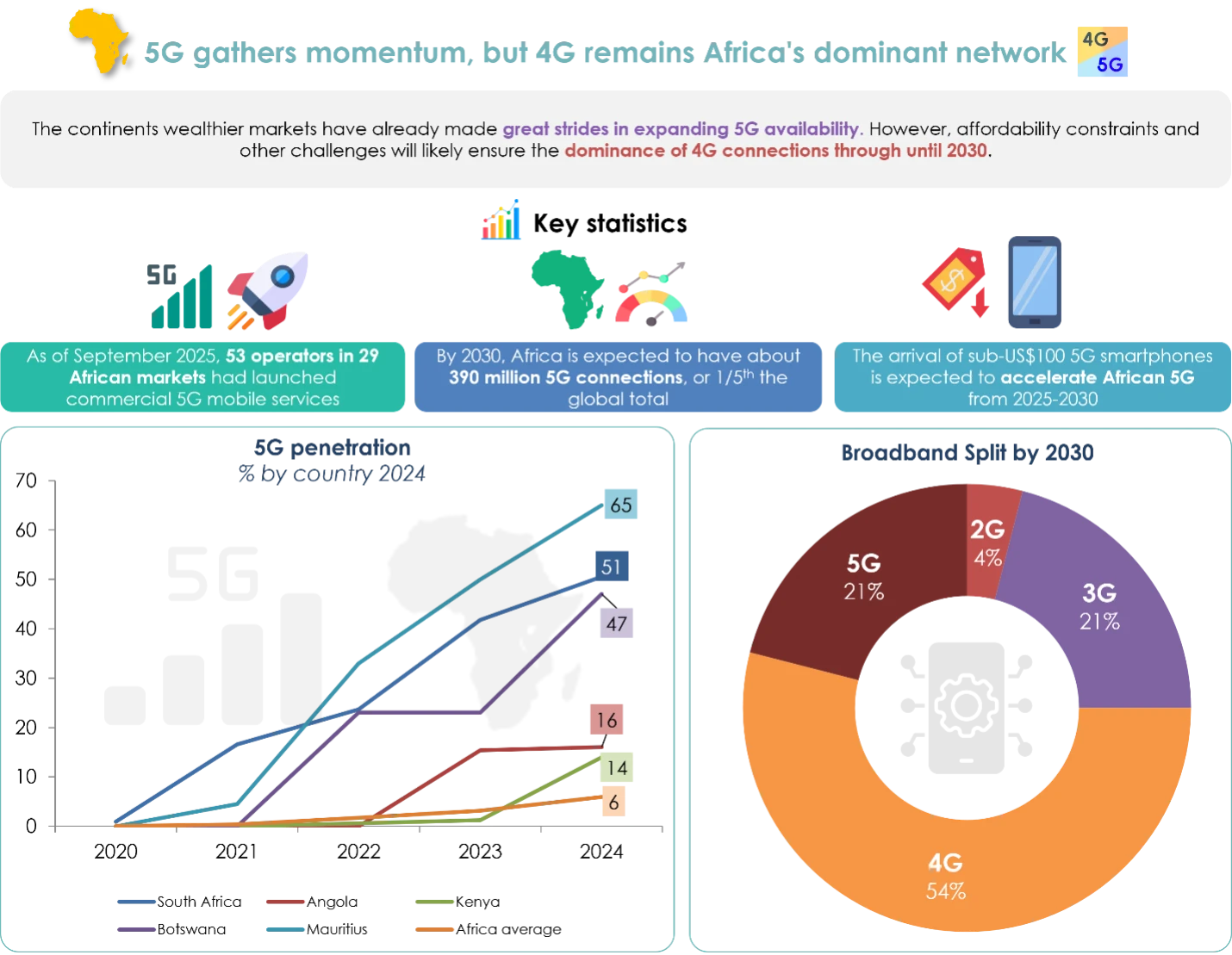
Africa’s mobile technology market gained a sharper regulatory edge in Q2 as telecoms authorities and operators advanced reforms around spectrum and next-generation connectivity. Ghana opened its 5G market to competition after ending an exclusive licence model, while Mozambique awarded 5G spectrum to Tmcel, Vodacom Mozambique and Movitel. Nigeria began reviewing its telecoms policy after 26 years, with reform focused on data costs, service quality and modernised oversight. Zambia strengthened the 5G narrative through MTN’s Huawei indoor 5G deployment at Mulungushi International Conference Centre, providing an enterprise connectivity use case, while Zimbabwe reversed its 75% local ownership requirement for telecom operators, easing investor concerns. Regionally, East Africa advanced mobile roaming, and Mauritius launched KaliteNet to monitor internet quality. Together, these developments suggest that mobile growth has increasingly been shaped by spectrum access, ownership rules, and regulatory accountability. For operators, competitive advantage will increasingly depend on spectrum access, regulatory certainty and the ability to execute infrastructure rollouts efficiently.
Togo’s drone deal opens a hardware innovation pathway
Togo moved to build a domestic drone industry through a US$27.3 million partnership with Poland, supported by Cyber Defence Africa. The project aimed to develop local design, assembly and deployment capabilities across agriculture, logistics, industry and critical infrastructure monitoring. Beyond its technology value, the deal raised important commercial considerations around technology transfer, public procurement, cybersecurity safeguards and ownership of drone-related IP.
Kenya and Mauritius strengthen cybersecurity trust layers
Cyber resilience gained a stronger regulatory footing in the second quarter as Kenya approved a National Cybersecurity Agency to coordinate protection of critical digital infrastructure, incident response, resilience audits and sector-specific cyber units. Mauritius also advanced critical information infrastructure cybersecurity regulations, giving designated operators 12 months to comply. These developments demonstrate that digital trust is becoming a formal compliance issue for organisations scaling fintech, cloud and public platforms.
Kenya tests copyright limits for AI-generated works
In July, Kenya’s Copyright Tribunal ruled that machine-produced works could not attract copyright protection or be registered as original creations. The tribunal found that AI-assisted works may still qualify where sufficient human intervention and originality can be proven. The ruling reinforces the need for clear authorship records, commissioning terms and IP ownership clauses when generative AI is used in content creation, software development, marketing or design.
Closing note
As Africa’s mobile technologies and fintech landscape moves from adoption to architecture, the commercial opportunity is increasingly shaped by regulation, infrastructure and trusted partnerships. Adams & Adams supports clients navigating this complex environment through market entry strategy, regulatory compliance, IP protection, technology contracting, fintech structuring and cross-border expansion across African jurisdictions.
How can we help you?
We have offices in four major cities in South Africa: Pretoria, Johannesburg, Cape Town, and Durban. Additionally, we have another 23 associate offices in the rest of Africa. Please contact your nearest office for any legal enquiry or assistance.

