


Rolling Out the Rules: The Draft Cannabis Regulations Are Here
On 2 February 2026, the Department of Justice and Constitutional Development published an invitation for public comment on the Draft Cannabis Regulations (the “Regulations”), issued pursuant to section 6 of the Cannabis for Private Purposes Act 7 of 2024 (the “CPPA”). These draft Regulations provide the operational detail for the CPPA.
The Headline Figures
Let’s cut to the chase—the numbers everyone’s been waiting for. Adult persons may possess up to 750 grams of cannabis in a private place at any given time, and the same limit applies to possession in a public place for private purposes during any single day. As for cultivation, you’re permitted a maximum of five cannabis plants at any given time, regardless of size, shape, or strain. These thresholds are consistent with the CPPA’s mandate for the Minister to prescribe maximum amounts and have now been formally quantified.
Definitions Matter
The CPPA defines “cannabis” as the flowering or fruiting tops of a cannabis plant, including products made therefrom—but expressly excludes seeds, seedlings, stalks, leaves, and branches. A “private place” encompasses any building, dwelling, or land to which the public does not have access as of right, as well as portions of communal land used exclusively for cannabis cultivation. Crucially, “private purposes” requires the intention that cannabis be concealed from public view.
On the Road: Transport Rules
The drafters have clearly devoted considerable attention to transport. The Regulations cap transportation at 750 grams per day per person, inclusive of cannabis not yet removed from the plant. Cannabis must be concealed from public view during transit and during loading and unloading—preferably stowed in the boot or an enclosed storage compartment. Where that’s not feasible, a storage container ensuring concealment will suffice.
Here’s where it gets interesting: cannabis must not be handled, held, examined, or inspected during transport. Nobody in the vehicle may disclose to third parties that cannabis is being transported. However, before boarding, drivers must notify passengers that cannabis is present, and passengers must similarly inform drivers if they’re bringing any aboard. Drivers retain the right to refuse entry if a passenger declines inspection of their cannabis.
The Regulations also prohibit mixing transported cannabis with any other substance and stipulate that only varieties or strains permissible under applicable law may be transported. This appears to anticipate future legislation governing permissible strains, though no such provisions currently exist in the CPPA.
Clearing the Slate: Expungement of Criminal Records
Sections 5(1)(a) and 5(2)(a) of the CPPA mandate automatic expungement of certain cannabis-related convictions. Where automatic expungement hasn’t occurred, individuals may apply in writing to the Director-General using the prescribed form. If the application is approved, a certificate of expungement is issued and submitted to the head of the Criminal Record Centre of the South African Police Service within 14 working days. The Criminal Record Centre must then confirm in writing within 21 working days that the record has been expunged.
What’s Left Unanswered?
One notable gap: the Regulations don’t clarify whether the 750-gram limit refers to harvested or dried weight—a distinction that could make a significant practical difference.
Have Your Say
Public comments on the Draft Regulations must be submitted by 5 March 2026 to the Department of Justice and Constitutional Development. Whether you’re posting, hand-delivering, or emailing, now’s the time to weigh in.



Chat Chat Chatterbot - Shall We Register Your Name?
So, you have birthed a chatbot and given it a name, what now? Should you register the name of the chatbot as a trade mark? The answer is a simple one, yes. If the chatbots are customer-facing, particu...
October 06 2026
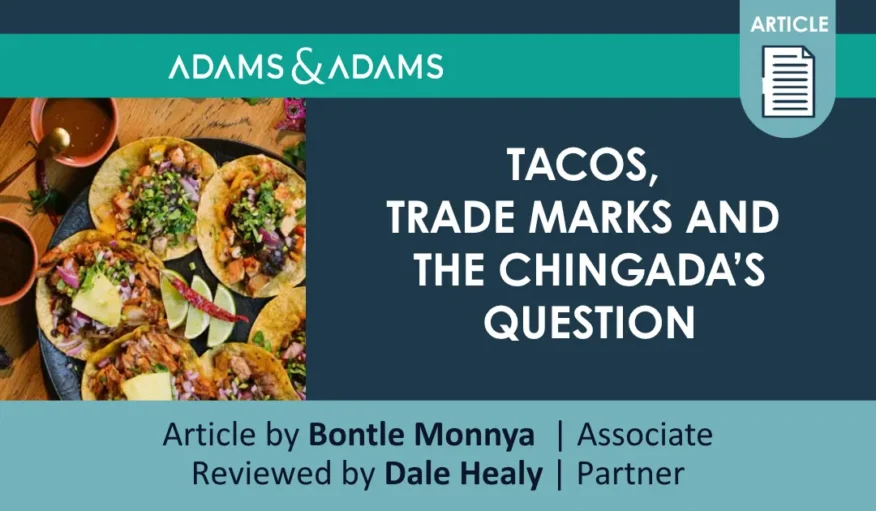
Tacos, trade marks and the CHINGADA’S question: The curious case of a Cape Town restaurant name
I went to Chingada’s in Cape Town this week for Taco Tuesday. It is a striking restaurant: colourful, theatrical and deliberately Mexican in its presentation. As tends to happen when one encounters ...
October 06 2026

Your Brand Crossed the Border. Did Your Trade Mark?
Why foreign brand owners should protect their trade marks in South Africa By Amina Suliman and Ntethelelo Ndaba Your Brand Is Here. Are Your Rights? Expanding into a new market is exciting. Businesses...
October 01 2026