


Snuff said about plain packaging
It has been well reported that the Tobacco Products and Electronic Delivery Systems Control Bill (“the Tobacco Bill”) aims to tighten regulations around smoking and vaping. Specifically, the bill seeks to introduce plain packaging, which is standardised packaging devoid of branding, including logo trade marks.
In addition, the Bill initially sought to treat nicotine and non-nicotine electronic delivery systems in the same way as combustible tobacco products, which means that e-cigarettes or vapes would similarly be subject to the regulations proposing, inter alia, plain packaging and a ban on the public display of such goods.
Recently, during public consultation in relation to the Tobacco Bill, the proposed provisions of the new legislation, particularly those concerning the ban on advertising, were met with further resistance. Concerns raised included the rise in the illicit trade in counterfeit tobacco and nicotine products, due to the implementation of plain packaging, and the lack of law enforcement resources to police such activity.
Attempts to ringfence vapes as a lesser evil than combustible tobacco products and possibly exempt them from the same restrictions saw the Department of Health state that there are evidence-based tobacco treatments that exist which are safe and cost-effective, not including vapes. The Department’s view was that nicotine-delivery products, including heat-not-burn products, still led to the inhalation of nicotine, which meant that they were not an effective harm-reduction mechanism.
Despite the Department’s reinforced stance, it did state that it is willing to consider exemptions for non-combustible products such as vapes from certain labelling and packaging requirements, provided that these products do not make advertising claims that are false or misleading.
This concession follows an earlier proposal to distinguish more clearly between combustible and non-combustible products. This is a departure from the initial prerogative to have a unified law for both types of products and vapes may yet be subject to separate and distinguishable regulations at least insofar as packaging and labelling requirements are concerned. Even so, the proposed laws still restrict the rights of trade mark owners and we continue to watch out for all smoke signals relating to this legislation.

Kim Rampersadh
Chat Chat Chatterbot - Shall We Register Your Name?
So, you have birthed a chatbot and given it a name, what now? Should you register the name of the chatbot as a trade mark? The answer is a simple one, yes. If the chatbots are customer-facing, particu...
October 06 2026
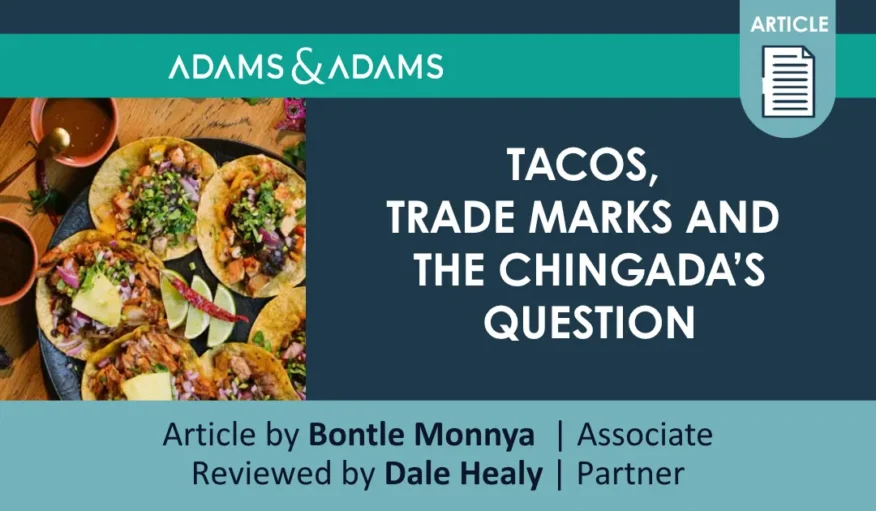
Tacos, trade marks and the CHINGADA’S question: The curious case of a Cape Town restaurant name
I went to Chingada’s in Cape Town this week for Taco Tuesday. It is a striking restaurant: colourful, theatrical and deliberately Mexican in its presentation. As tends to happen when one encounters ...
October 06 2026
Your Brand Crossed the Border. Did Your Trade Mark?
Why foreign brand owners should protect their trade marks in South Africa By Amina Suliman and Ntethelelo Ndaba Your Brand Is Here. Are Your Rights? Expanding into a new market is exciting. Businesses...
October 01 2026